| An Aviation Enthusiast's Kit Collection |
| Home | How it All Began | 50's & 60's | 1970 up | Various Topics | Books | Contact |
|
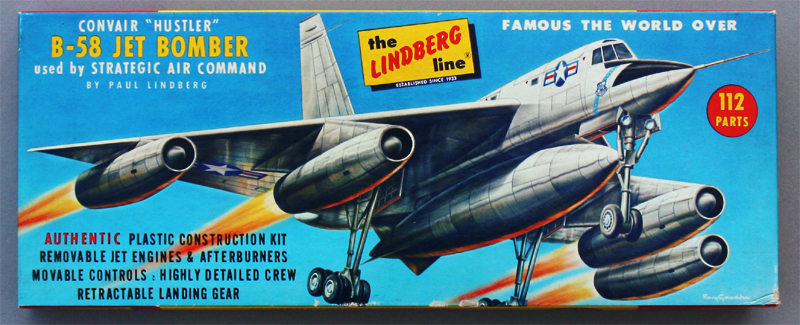
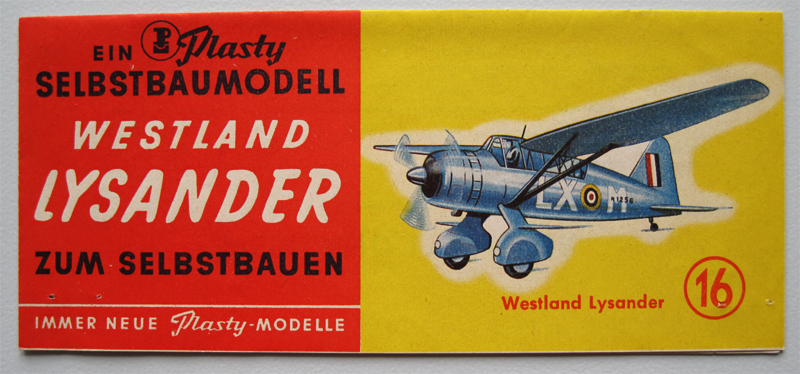
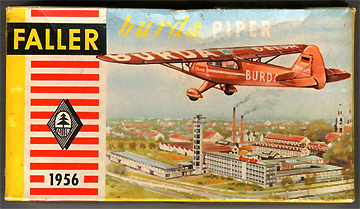
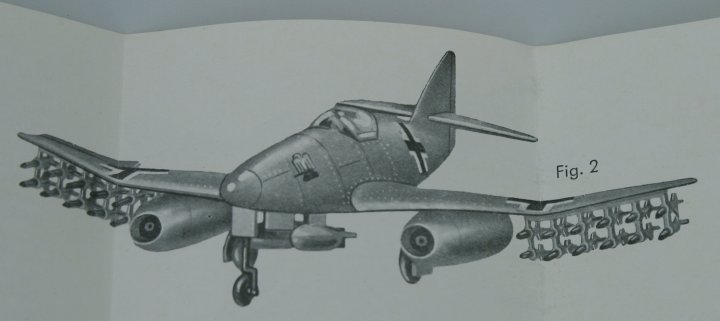
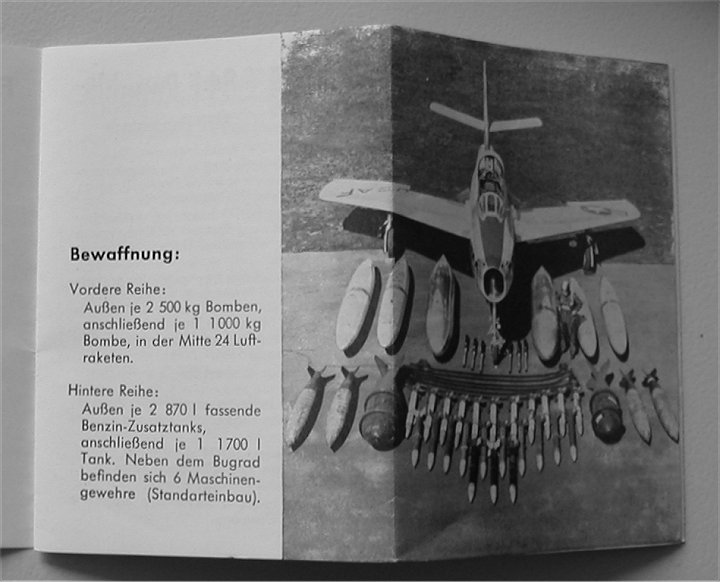
How it All Began A Nostalgic Look at my Early Modelling Days First Phase My first plastic kits, in a time between the mid and the end of the 1950's, were from AIRFIX , strictly speaking Plasty which distributed and repacked Airfix kits in Germany. The Westland Whirlwind helicopter and the tractor (pictures right). I have as well clear memories of the kits that came next: The Westland Lysander with bombs attached to stub wings and that coarsely moulded cooling shutters of the radial engine and the Supermarine S6b (picture right). I´m quite sure I built a Fokker Dr.-1 Triplane in red plastic. Possibly I also had a Spitfire in these early modelling days. I remember very well the Hawker Typhoon with that strange circular hole in the recessed panel which should be the grill of the radiator. I cannot determine with certainity if I have to place the Typhoon in this first phase of modelling, or in the second described below. In these early AIRFIX times or shortly after I also built some aircraft kits from the German manufacturer FALLER . I remember to have build the Piper Cub in Burda colors, the Messerschmitt Me-262 (with that clumsy unrealistically array of 24 underwing rockets), the Junkers Ju-87 Stuka (tank buster version G, with that pair of 37mm canoms slung beneath the wings), the Republic F-84 Thunderjet (with that stunning photograph in the instructon sheet depicting the choice of external weapons) and some more, which I cannot remember clearly (possibly, the Fieseler Storch , the Ju-88 or He-111). These kits were rather basic and it seems that even im my early days I had recognized that their accuracy was not good enough for serious modelling . That still holds today, but nontheless I rate FALLER aircraft as very interesting from the collector's resp. historian´s point of view. Around 1960 I started collecting the SIKU range of ready assembled plastic models in 1:250 scale. This collection of about 33 out of the complete range of 35 aircraft had a great influence on me to get aquainted to types of contemporary aircraft. I also got some aircraft from the competitor WIKING, but similar to FALLER, at those times, this brand did not satisfy my demand in collectability, functionality and accuracy. Second Phase Also around 1960 the second phase of collecting and building plastic kits began. That was the time of "working" kits from LINDBERG , AURORA , MONOGRAM and Revell. These kits were more impressive for me, as to their bigger scale and functonality. Landing gear could be retracted, engines cowlings opened , ejector seats fired. LINDBERG kits had the lead with 9 aircraft and 2 ships. (B-58 Hustler, Crusader, Starfighter , Ju-88, Avro Vulcan, Hawker Hunter, F-100, He-111, Me-262 , Decoy Ship No. 755 and a landing ship, most likely the Troop Attack Craft No. 779M ). I remember to have built 5 AURORA kits: Catalina, D.H.10, Hiller X-18, Boeing F4-B and the Albatros WW1 fighter. I remember that, being made of thicker plastic as usual, these kits always were classified as as "heavy" by me. Generally this brand had a sort of mystic for me. I also had some twin-engined executive aircraft from AURORA: The Aero Commander, the Beech D18 Expeditor, the Piper Apache and the Cessna 310. I´m not sure, if they belong here or to the next phase of modelling. MONOGRAM has been presented by three kits, the North American T-28 , the Wright Flyer and the Cessna 180. Of paramount importance for me has been the 1959 catalog of Revell Germany. Browsing this catalogue ever and ever again has been one of the key experiences for me. It was my first type reference and together with the SIKU aircraft models and certain books , this Revell catalogue had a strong influence on me inmy youth and layed the foundations of becoming a fanatic aircraft type collector. I got 8 kits from Revell in the second phase of modelling: The XSL-01 manned spaceship, the Nautilus submarine , the USS Essex aircraft carrier and the Bounty historical ship' ( listed in the 1959 catalog) and the Sikorsky HOAS-1 Helicopter , the Bell X-5 , the yellow Bell P-39 Airacobra Racer (issued in the early 1960's). Third Phase Starting about 1963 at the age of fourteen had been the heighday of collecting and building kits in constant 1:72 scale. AIRFIX had the lead with about 50 kits from all classes of aircraft . But there was strong competiton from from Revell's new series of 1:72 WW1 and WW2 fighters, the first set of which had been issued in 1963. I built about 20 of them. This series from Revell had a special meaning for me, as in those days I had the feeling I started serious model bulding with these kits. They had a clear edge over the contemporary AIRFIX range of comparable fighters in realism, collectability and accuracy at least in my former opinion. Even without checking dimensions, they simply had a more realistic general appearance , and even looked good when not painted. It would be an interesting field of research to find out how they compare applying contemporary know -how , 40 years later . The best results I got with the following kits: The Bell P-39 Airacobra, which I painted in a matt greyish white according to the picture of an IL-2 in Aircraft Camouflage and Markings, when I succeeded to paint the Russian stars by manually not using the decals. And the Buffalo (picture aboveright), which I painted in gloss grey overall. Continued right column |
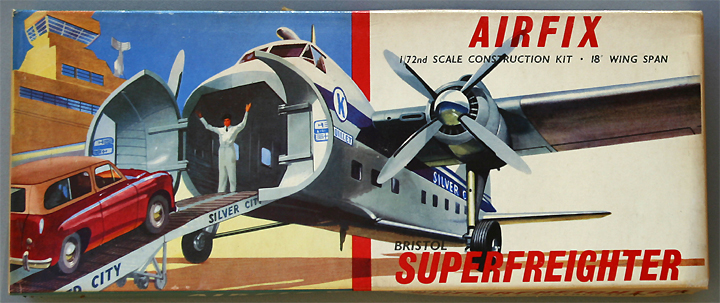
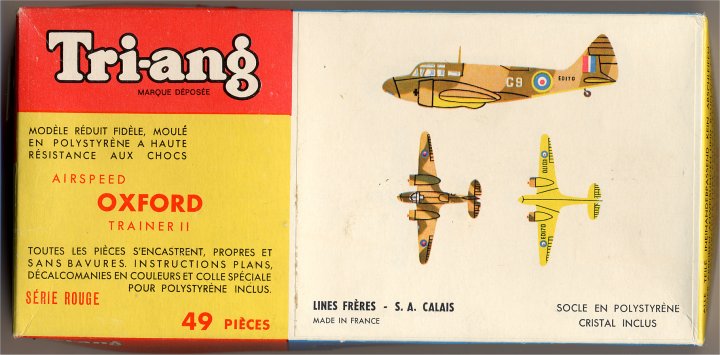
But Revell in these days had nothing comparable to offer like AIRFIX when it came to civil and military transports and bombers in 1:72 scale. AIRFIX´s Bristol Superfreighter, Douglas C-47, Fokker Frienship, Shorts Sunderland, DeHavilland Heron, Lockheed Hudson, Lancaster, Vickers Wellington and Dornier Do-217 are on top of my list of fond memories. I remember to have had four ships from AIRFIX: the Battleships Nelson, Hood, and Bismark, the aircraft carrier Victorious and possibly the destroyer Cossack. In this period, I also started to collect and use aircraft books and magazines for reference. Examples are Fighters of WW2 by William Green (Mcdonald) and Aircraft Camouflage and Markings by Robertson (Harleyford). Somewhere in between there have been quite a number of FROG kits. Strictly speaking Tri-ang kits which was the brand name of FROGs produced in France by Lines Bros. to be distributed in EC countries. I fondly remember the series of kits that came in small flat standard size boxes and non standard scales like D.H.C-2 Beaver, D.H. Dragon Rapide, N.A. Tornado, Lokheed Neptune, H.P. Hampden . I´m not 100% sure if these actually beared the FROG or the TRI-ANG label as FROG kits could have been distributed concurrently in Germany. But the kits that came with color profile drawings as boxart certainly were from TRI-ANG. I was and still are very fond of this type of boxart. FROG released subjects of British types that havenot been duplicated by other manufacturers in these times. The Airspeed Oxford , Percival Proctor , Miles Master and Magister, rank high in my list of fond memories. (FROG & Tri-ang). Similar to AURORA the Tri-ang kits had a sort of mystic atmosphere for me. I remember to have additionally built the following kits in the mid sixties: - Sud-Aviation Trident (I´m not sure about the manufacturer, probably HELLER) - Douglas SBD-5 Dauntless from HAWK. - Mitsubishi Ki-46-III Dinah (around 1:50 scale, probably LS). - Arado 234 and Heinkel He-100 from Lindberg in 1:72 scale. - Lo-100 aerobatic glider from Geobra. Addendum Kits I remembered only lately The End and a New Beginning At the end of the 60´s I stopped building and collecting plastic kits. In the end 70´s I collected kits of civil aircraft and Cold War jets of various brands for a short period without building them. In 2003 I discovered eBay and started collecting vintage kits as described in this website. |




| Home | How it All Began | 50's & 60's | 1970 up | Various Topics | Books | Contact |
| Started : 2003 | Revised : 16.03.2007, 09.08.2013, 1.11.2015 | Author: cjk | ©cjk |